
Venerable Objects: When "Old" Is Relative
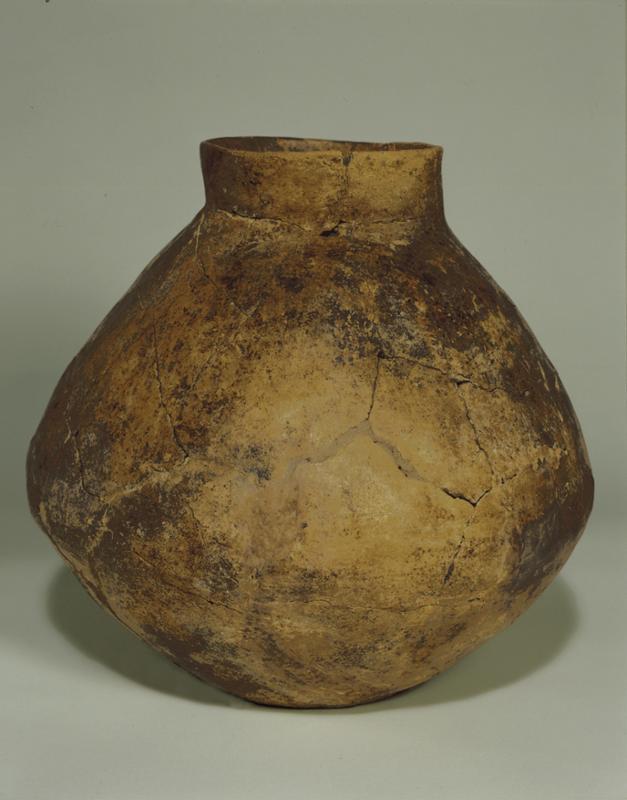
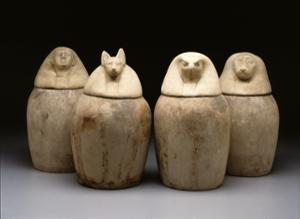
Many objects in the museum are old, although “old” is a relative term when timescales run in millennia. In what is now Iran, for example, a Penn team working in the late 1960s found what the museum calls as the “oldest wine jug in the world.” Made sometime between 5400 and 5000 BCE, this seven-thousand-year-old clay pot once contained an alcoholic grape beverage, as chemical testing has verified.[1] In contrast to the Iranian wine jug, many of the Penn Museum’s ancient Egyptian mummies, mummy cases, and canopic jars (the last of these holding the internal organs of mummified humans and other creatures) are “only” about three thousand years old.
[1] Amy Ellsworth, “7,000-Year-Old Wine Jar,” Penn Museum Blog: Beyond the Gallery Walls, July 18, 2012, http://www.penn.museum/blog/collection/125th-anniversary-object-of-the-day/7000-year-old-wine-jar-object-of-the-day-24/ (accessed March 10, 2015); Stacey Shackford, “Biomolecular Archaeologist Uncorks World’s Oldest Known Grape,” Ezra Update: Cornell’s Monthly Newsletter for Alumni & Friends (May 2012), http://ezramagazine.cornell.edu/Update/May12/EU.McGovern.uncorks.html (accessed March 10, 2015).