
Graphics and the Role of the Image

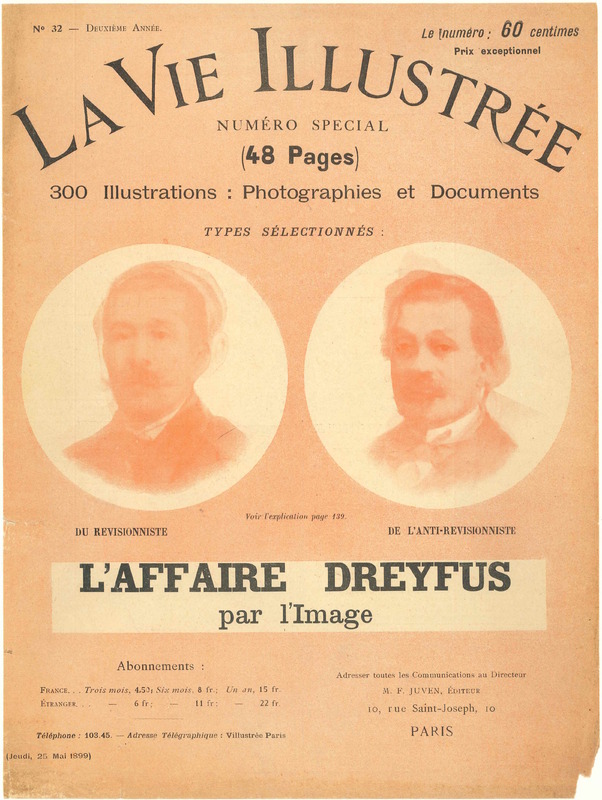
Throughout the Affair, politicized images circulated in newspapers, periodicals, posters, and other media. The images of the Affair reflect the passion and anger of those on both sides—the well-known cartoon “A Family Dinner,” by the artist known as Caran d’Ache, reflects the passions aroused when the topic of the Affair comes up at the table and a tranquil family meal explodes into chaos.
A popular type of image was the caricature: both pro- and anti-Dreyfus periodicals often featured unflattering portraits of figures of the other side. One image shown here instructs the reader on how to draw Emile Zola’s face using the basic image of a chamber pot. Newspapers sometimes reacted directly to images published in rival publications. The anti-Dreyfusard Psst…! caricatures Senator Scheurer-Kestner as a terrorist for his role in making public his belief in Dreyfus’s innocence. The image of the bomb is used again days later by the pro-Dreyfus Le Sifflet: the caricaturist Ibels shows Marianne, representative of the French Republic, watching as the bomb, representing the Dreyfus Affair, prepares to explode in the face of the military.
Pro and anti-Dreyfus forces used and manipulated images to gain public attention. Three days after Zola’s J’Accuse . . . !, the anti-Dreyfus periodical Le Pilori showed Dreyfusards firing their weapons, down to their “last cartridges.” In the Affair-inspired board game “Jeu de l’Affaire Dreyfus et de la Vérité” (The Game of the Dreyfus Affair and of Truth), distributed by Clemenceau’s newspaper L’Aurore, players circled around a playing board, seeking the Truth at the center. Rather than using caricature and mockery, the game glorifies pro-Dreyfusard figures and appeals to players’ notions of justice.
New visual media too were impacted by events. The pioneering early film creator and director Georges Mélièswas a Dreyfus sympathizer, and just after the Rennes trial in 1899, he produced a fifteen-minute film called simply L’Affaire Dreyfus. The film consists of brief, dramatic scenes—based on the graphic images like those in the illustrated newspapers seen throughout the exhibit—depicting Dreyfus’s first trial, imprisonment, return, and retrial.
The Affair also made its way into the commercial world, with advertisements for items such as toothpaste and cigarettes featuring Dreyfus’s likeness. Even sheet music could convey views of the Affair simply through images: the “Dreyfus March Two-Step,” composed in the whirlwind of the Rennes trial and published in Brooklyn, presents a heroic image of Dreyfus.