
Prisoner—Alfred Dreyfus
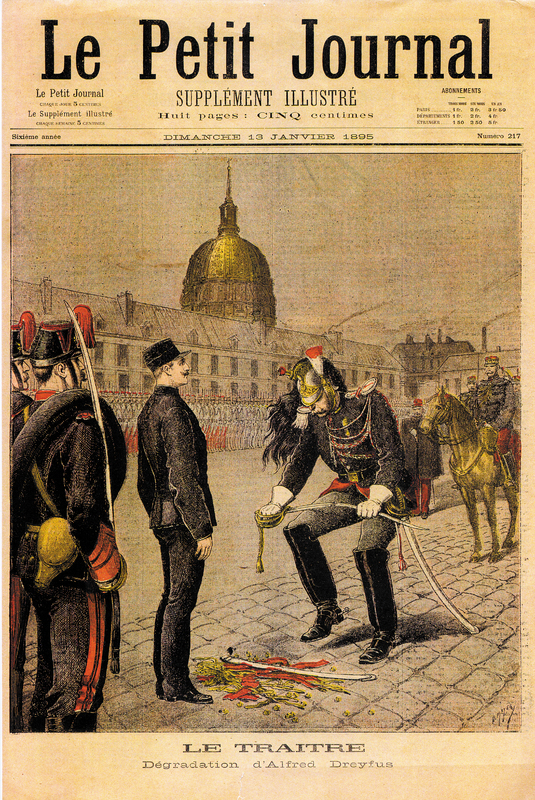
Convicted of treason, Alfred Dreyfus was sentenced to permanent exile in a walled fortification. His army rank was cancelled, and he was forced to undergo military “degradation.” The degradation ceremony, a formal public humiliation in which his insignia were torn off his uniform and his sword broken in two, took place on January 5, 1895. Dreyfus was then sent to serve his sentence in isolation on Devil’s Island, off the coast of French Guiana.
Most prisoners did not survive their incarceration in the penal colony of Devil’s Island, due to prevalent tropical diseases and an inhospitable climate. Dreyfus suffered greatly in this environment, both physically and psychologically. Isolated and surrounded by a high-walled enclosure, a prey to vermin and scorpions, he was shackled for extended periods of time. His diet, often consisting of foul food, was cooked and eaten in rusty cans.
Nevertheless, throughout his ordeal, Dreyfus read, drew, and wrote a diary to keep his mind sharp. He was permitted to exchange letters during his five year imprisonment, and he corresponded frequently with his family—in particular with his wife Lucie. Despite the deplorable conditions, his letters reflected his desire for justice and his continued faith in the French judicial system. Clearly, his superiors in France would not have been disappointed to hear of his death, but Dreyfus, knowing he was innocent, carried on as best he could under hellish conditions.
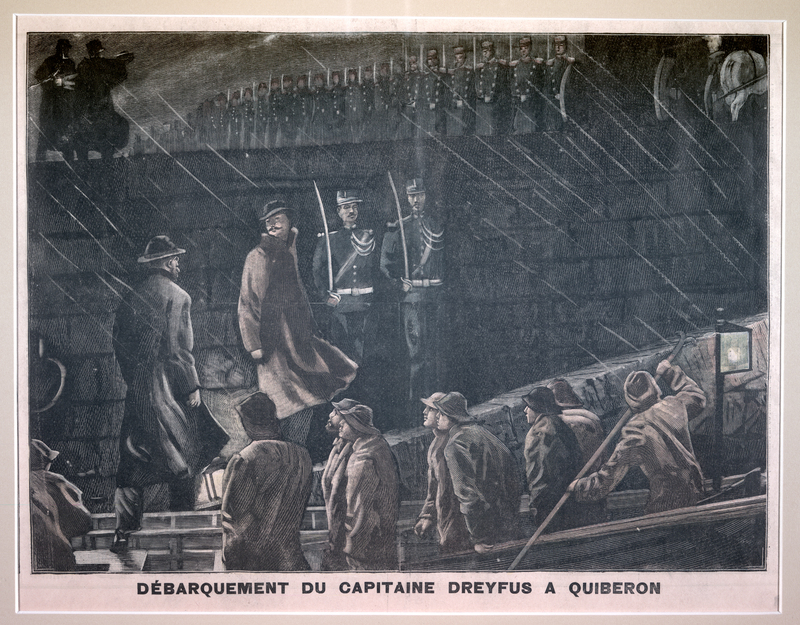
While there, Dreyfus was unaware of events in France, and of the attempts by supporters to prove his innocence and secure his release. In 1901, two years after his release, Dreyfus published a book about his experience at Devil’s Island entitled Cinq années de ma vie (Five Years of My Life). Part of the motivation for writing the book came from Dreyfus’s mission to clear his name.