Antillean Couple
Dublin Core
Title
Description
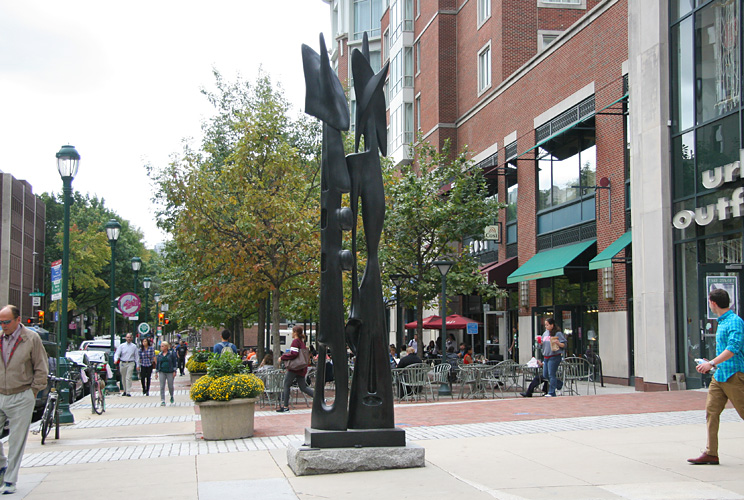
Antillean Couple by Agustín Cárdenas, 1957

Agustín Cárdenas was a cuban artist who joined the surrealist movement in Paris and injected Cuban influences with the philosophies of Surrealism to create his unique art style. Surrealism had no single origin, but is a conglomoration of scientific thought and previous modern art advancements.
The initial styles of abstract art (cubism) was based on the exploration of the relationship between human perception and conventional forms of representation. It became apparent that perception is not only flexible, but also easily manipulated. The post-impressionist Paul Cézanne was famous for his still life paintings of fruit, where objects often lay on an impossible table. Perspective-wise, everything is tilted. If the painting was pulled into reality, the objects would slip off. Yet, because of the way human perception works, viewers could still register the fruit as lying on top of the table even as a part of them realized that something is amiss. Through these paintings, Cézanne began the conversation on how people perceived the world and how that related to reality. This was the beginning of Cubism, but surrealism continued the trend of questioning human reason and human perception.
Describing Surrealism in terms of Cubism; Surrealism is like a more romanticized version of Cubism. With the influences of Freud and his philosophies of the unconscious mind, Surrealist artists tried to tap into the subconscious creative mind, trying, as André Breton explained, to create "in the absence of any control exerted by reason, and outside all moral aesthetic considerations".
In one untitled sculpture by Cárdenas, there are two abstract forms connected to each other. 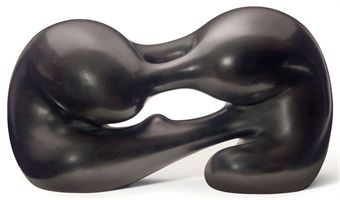 It appears as if two figures are sticking togehter, fused by some sort of gooey embryo, yet there isn't much indication that these two are really figures. The abstraction might come from Cárdenas's efforts to create a figure without any deliberate decisions to make a figure. Rather, by attempting to tap into the subconscious, one goal in making this sculpture might have been to let the subconscious create the figures without any conscious inteferrence, because the result might be a purer form of figure representation.
On the other hand, Antillean Couple is informed by its title. The figures can be recognized without context, but once the title of the piece is revealed, it becomes impossible not to see the figures more clearly.The smooth curves become more sensuous, and the two pillars become an intimate embrace. Human perception is used against viewers. In surrealist art, this is often done in order to create paradoxes and confounding images which saddle the line between absurdity and realism.
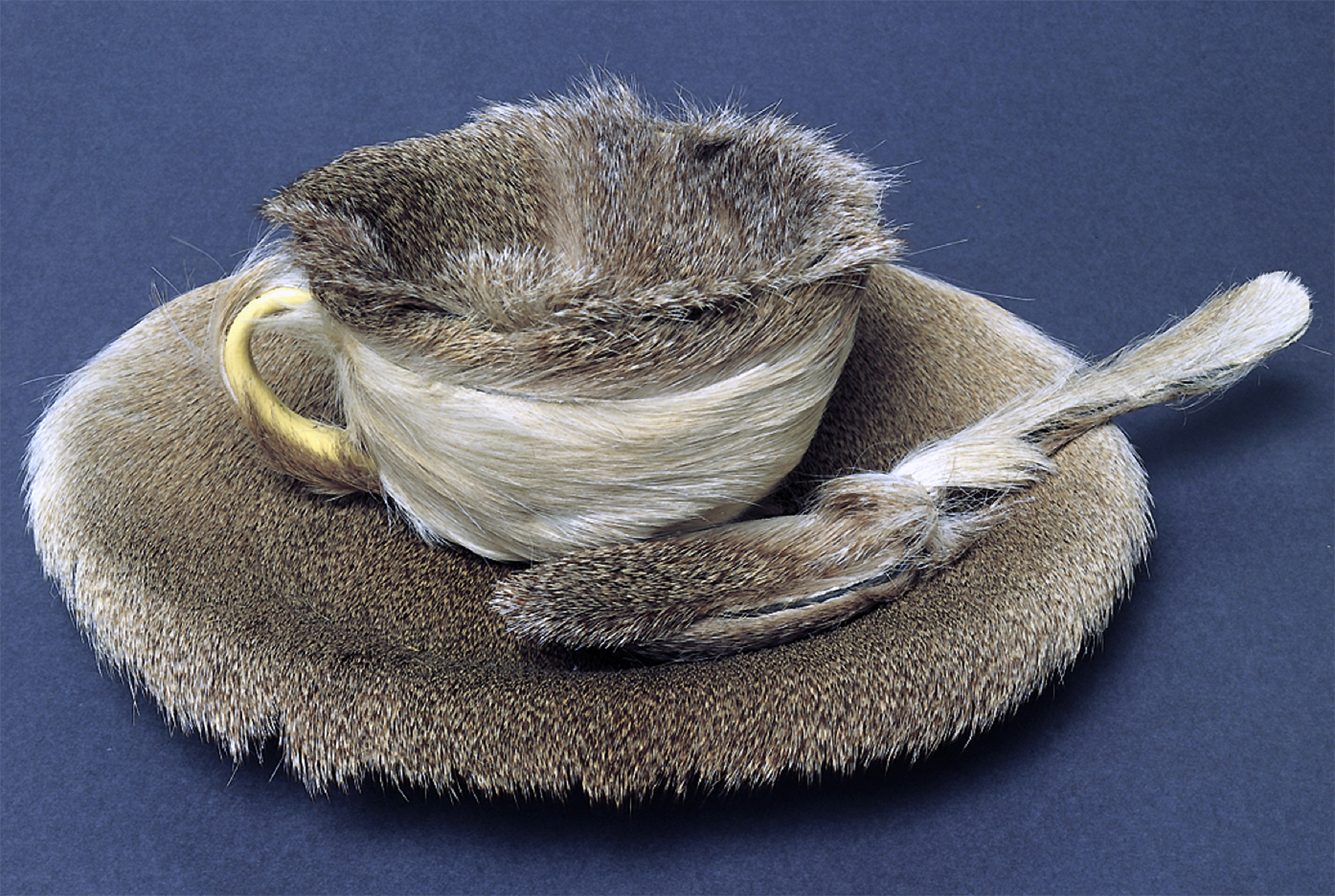
Surrealist artists like Rene Magritte and Meret Oppenheim would often use classical representation styles to confound people, pointing out the flaws of human perception through their artwork.  The famous This is Not a Pipe painting with accompanying image representing a pipe turns the idea of language and comrpehension on its head while Oppenheim's Fur-Covered Cup does a similar thing with sensation and touch. By mixing what is usually felt and wha is usually tasted together, the feelings of uneasiness and revulsion raises questions about perception anew.
Cárdenas's artworks often belong to this mode of thought--even as Antillean Couple hints at sensuous figures, intimacy, and even love, the abstraction forces one to question from where in the recesses of the unconscious mind did those observations come from
.
Creator
Date
Coverage
References
The Treachery of Images
History of Surrealism
Other references:
http://www.lahabana.com/Culture/articles_general.php?id=Las-Formas-del-Silencio-by-Agustin-Cardenas
http://monoskop.org/images/9/99/Foucault_Michel_This_Is_Not_a_Pipe.pdf